
Our Heritage
Emmanuel Reformed Church was established in 1877 in the Sutton Community, and is an organic member of the Reformed Church in the United States. The Reformed Church traces its history from apostolic times through the Protestant Reformation to today. We are indebted to God for raising up church leaders like Martin Luther, Ulrich Zwingli, John Calvin, and John Knox to direct His people back to the teachings of Holy Scripture. Our Reformed ancestors, following in the theological footsteps of these men, migrated to North America in the 18th century and established Reformed congregations in the New World.
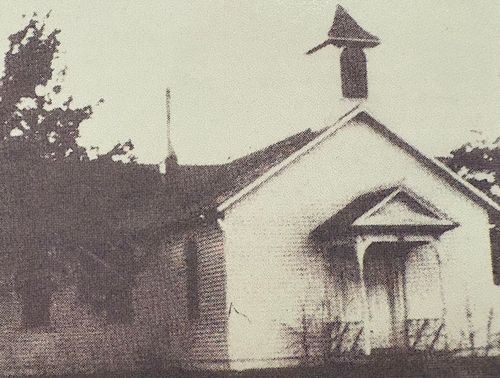
In July of 1873, a group of reformed German Christians living in Russia emigrated to the United states and traveled as far west as the railroad would take them - to Sutton, NE. There they settled, and in February of 1877, twenty six families were organized into the congregation of Emmanuel Reformed Church under the direction of Rev. Wilhelm J. Bonekemper, who served as pastor for 32 years. Initially, the congregation met in homes, and even a store. In January of 1878, the congregation met in their first church building, north of Sutton.
On May 11, 1879, a second church building in Sutton was dedicated. For many years, Rev. Bonekemper held morning services at the city location, and then drove six miles to hold afternoon services at the country church. In 1897, forty-five families left the Emmanuel congregation to stat the Free Salem Reformed church, north of the city. In 1908, seventy-two families left to form the Free German Reformed Hope Church (Hope Reformed Church) in Sutton. After this second exodus, Rev. Bonekemper resigned.
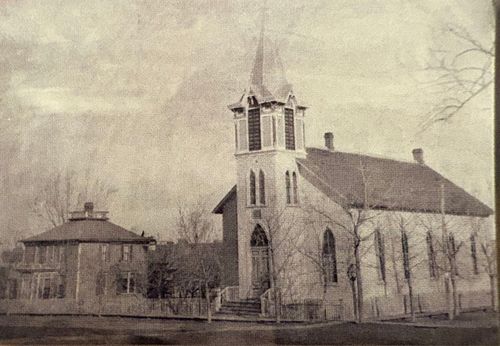 Emmanuel's subsequent pastors were Rev. Louis H. Kunst (1909-1913), Rev. P.S. Kohler (1913-1916), Rev. Reinhold R. Birk (1916-1932), and Rev Paul Traeger (1932-1945). In 1936, the country church was razed, as the advent of the automobile had made it possible for all the members to attend services in town. Shortly after Rev. Traeger's death, a fire nearly destroyed the city church when it was struck by lightning. The congregation quickly rebuilt, and repaired the building.
In 1934, most of the congregations in Emmanuel's denomination (the Reformed Church in the United States) merged with the Evangelical Synod of North America. The new denomination was named the Evangelical and Reformed Church, though it was not reformed. In 1957, the denomination merged again with the Congregational Christian Churches to form the United Church of Christ (UCC). Despite being swept into these mergers, the Emmanuel congregation retained its name and its commitment to upholding what is taught in the Heidelberg Catechism. Because of the mergers, there was confusion in the church regarding what should be taught and believed, and ongoing tension with the new denominations.
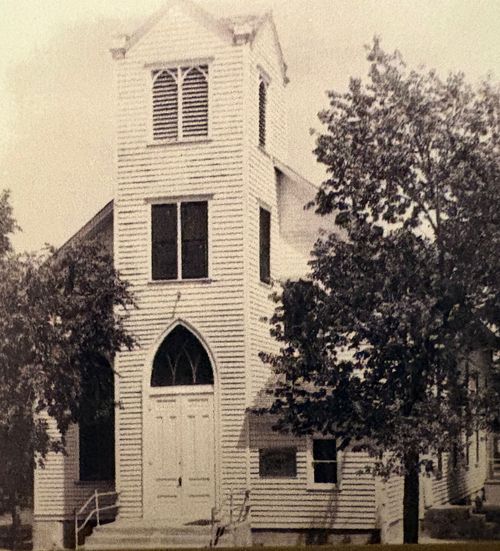 After Rev. Traeger's death, Rev. Calvin Stuebbe (1945-1958) and Rev. George Bartell (1958-1969) served as pastors. On April 27, 1969, shortly after Rev. Bartell's retirement, the Emmanuel saints, having become increasingly dissatisfied with their denominational affiliation, voted overwhelmingly to withdraw from the United Church of Christ. On June 18, 1968, the church voted to rejoin the Reformed Church in the United States (RCUS), also known as the Eureka Classis, thus realigning itself with its original ancestral and reformed heritage.
In early 1970, Rev. Vernon Pollema (1970-1979) was called as pastor. In 1976, the church building was razed, and the present building was erected in time for the church's centennial celebration. The pastors that succeeded Rev. Pollema were Rev. Lloyd Gross (1979-1988), Rev. Peter Grossman (1989-1995), Rev. Terry Jorgensen (1996-1998), Rev. George Syms (1999-2003), Rev. Dan Rogers (2004-2009), Rev. Joe Vusich (2010-2019), Rev. Carl Gobelman (2020-2025), and Rev. Martin DeWitt (2025-present).
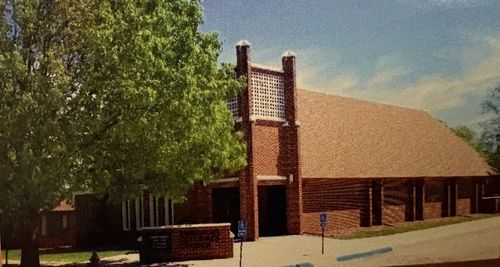 The Lord Jesus Christ has been very good to Emmanuel Reformed Church over the past 150 years. We are thankful to be able to continue in worship, serving Him as congregation in the Sutton community today!
Soli Deo Gloria!
